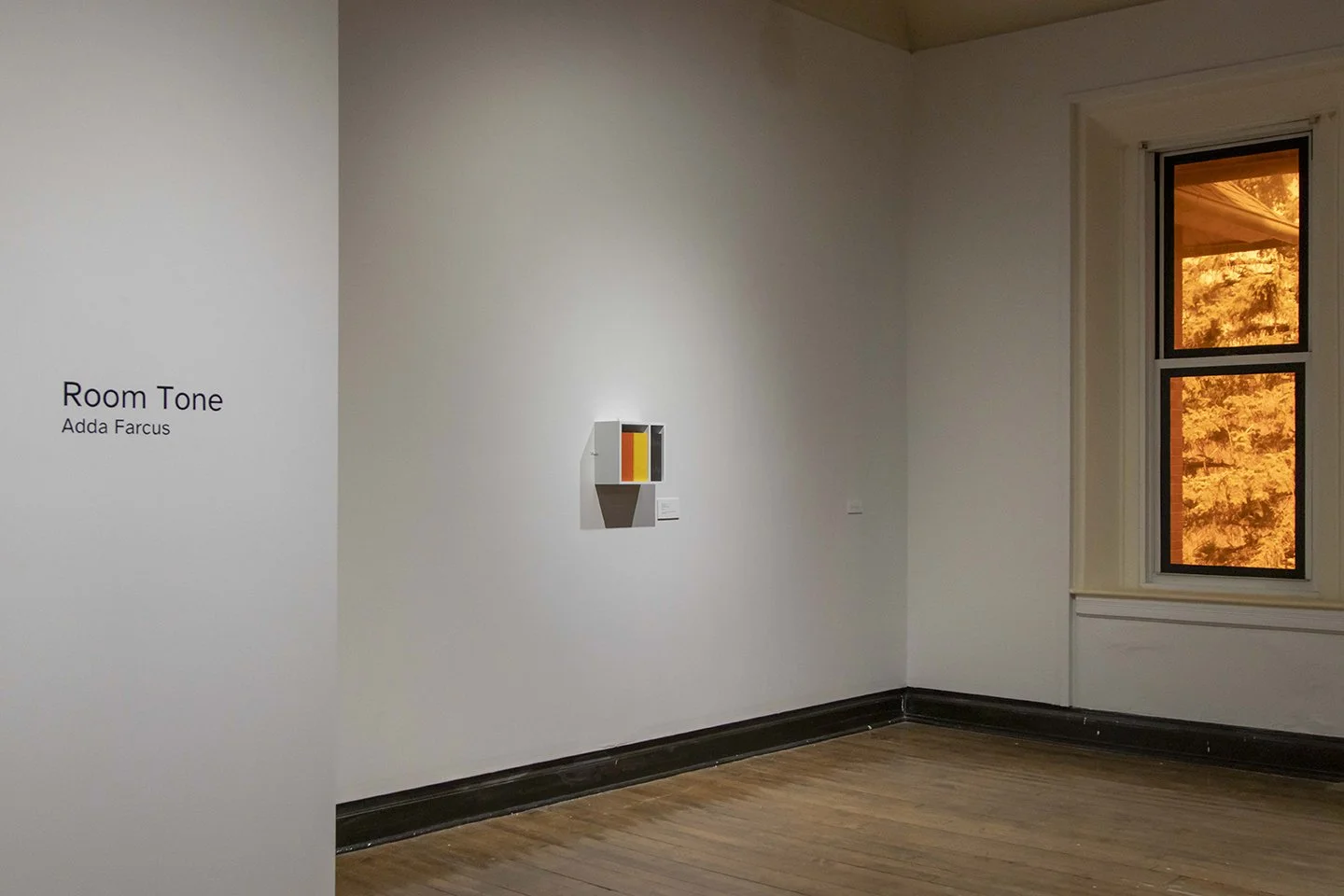
Room Tone
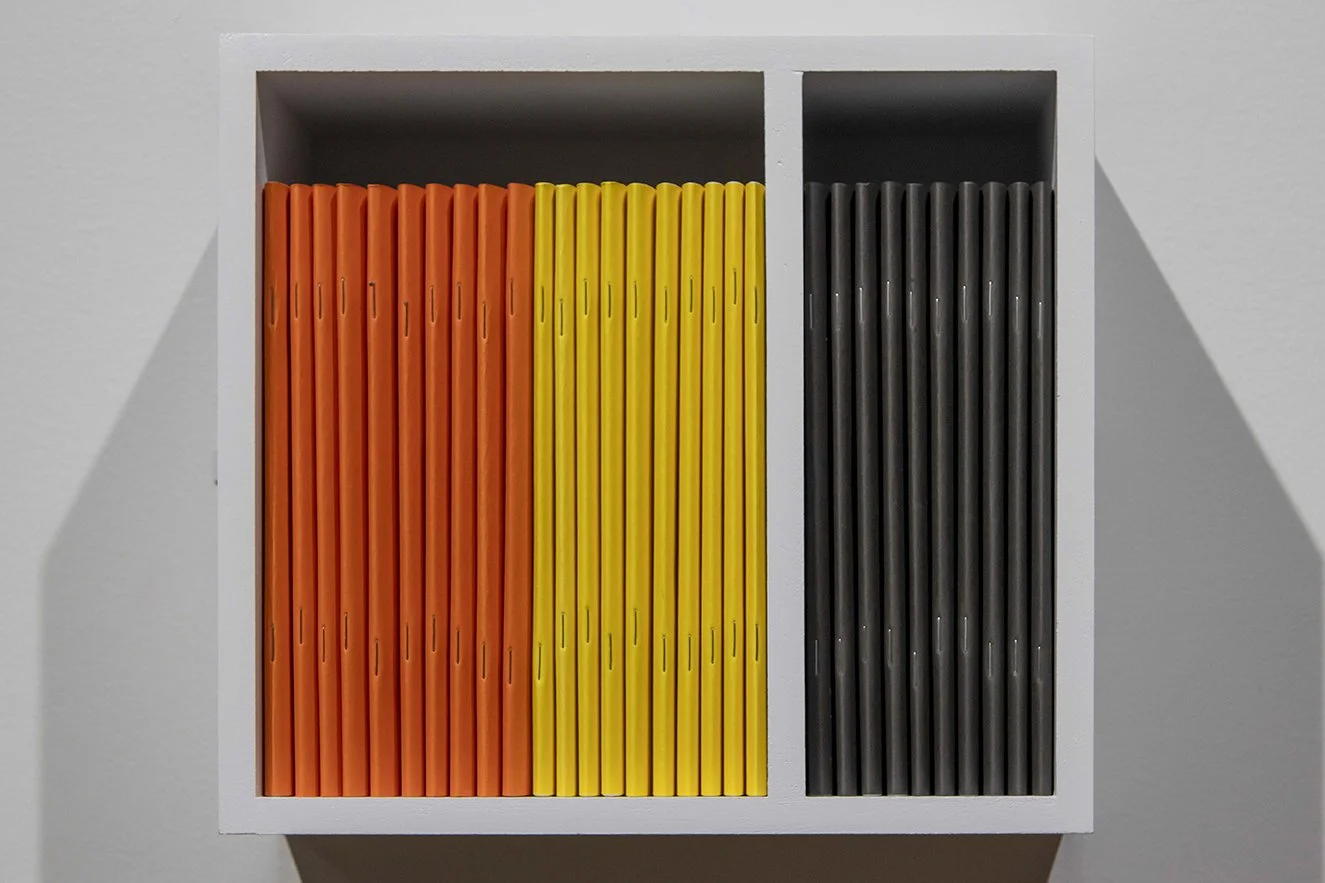
Wildfires, vol. 1
Wildfires, vol. 2
Psychoterratic Poems
zines, shelf
2025-2026
the color Andrea Estrada, a funeral director, chose to represent her feelings about climate change
lighting gels, acrylic paint on paper, tape
2026
Wake
discarded cemetery flowers, clinkers
2024
Score for Ames Meeks
graphite and soot on vellum, lighting gel, light box
2026
*recorded as part of Mt. Lemmon, available on Bandcamp
death doula Ames Meeks chose this color to represent their feelings about climate change
video
6:31
2026
* installed at Burgess Hall Art Gallery, Eureka College, Eureka, IL.
** documentation by Jade Minh-ha Nguyen
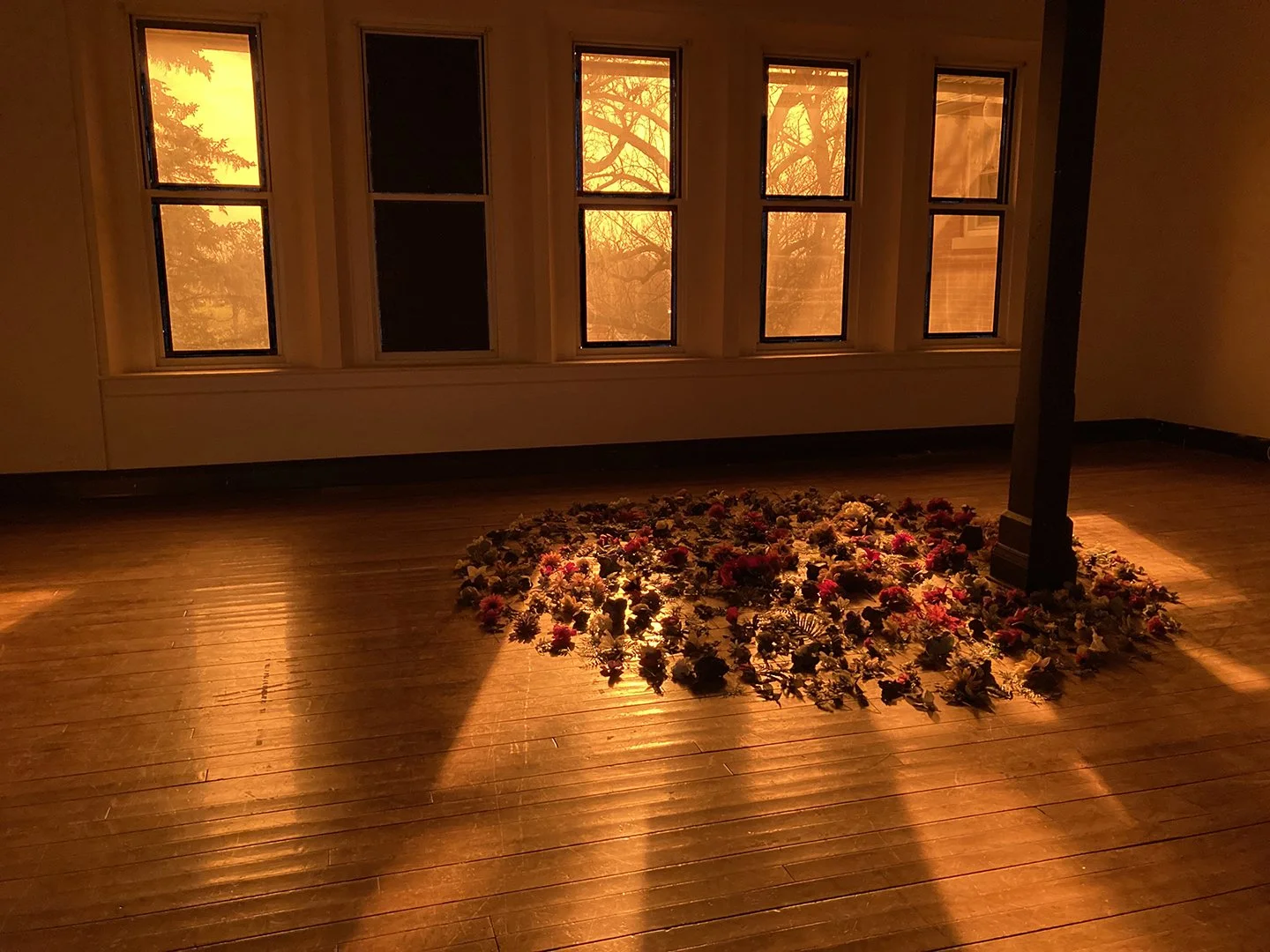
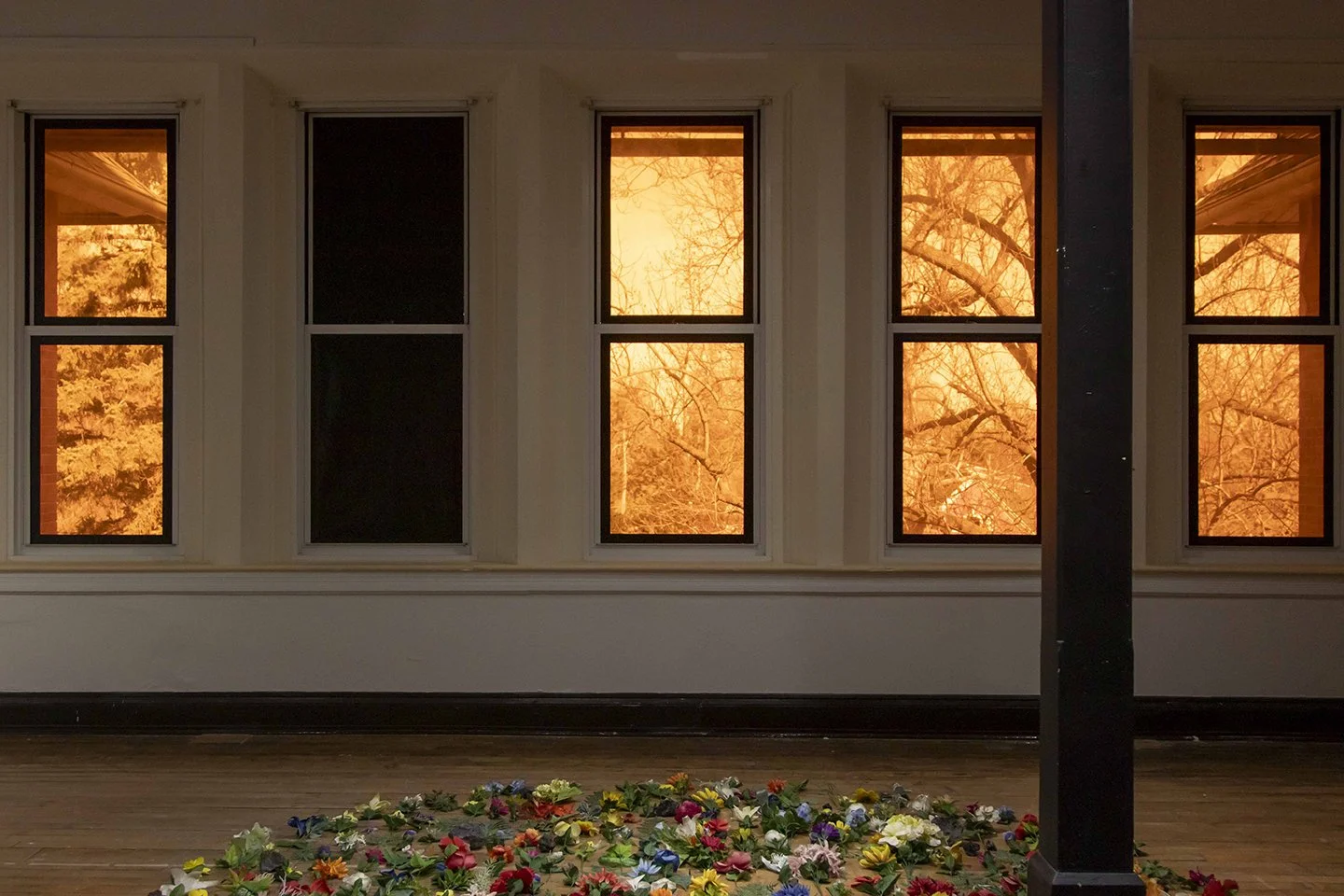
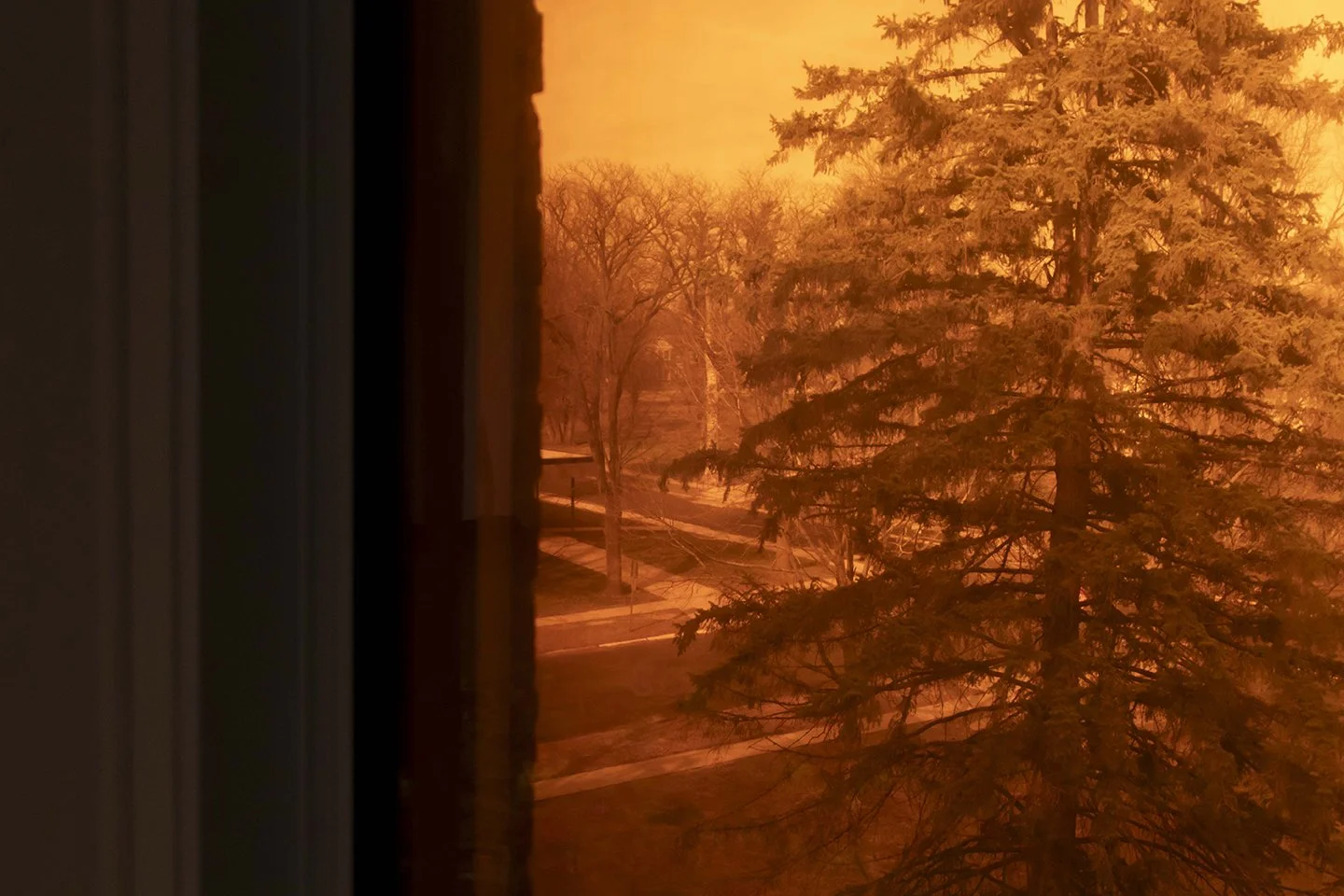
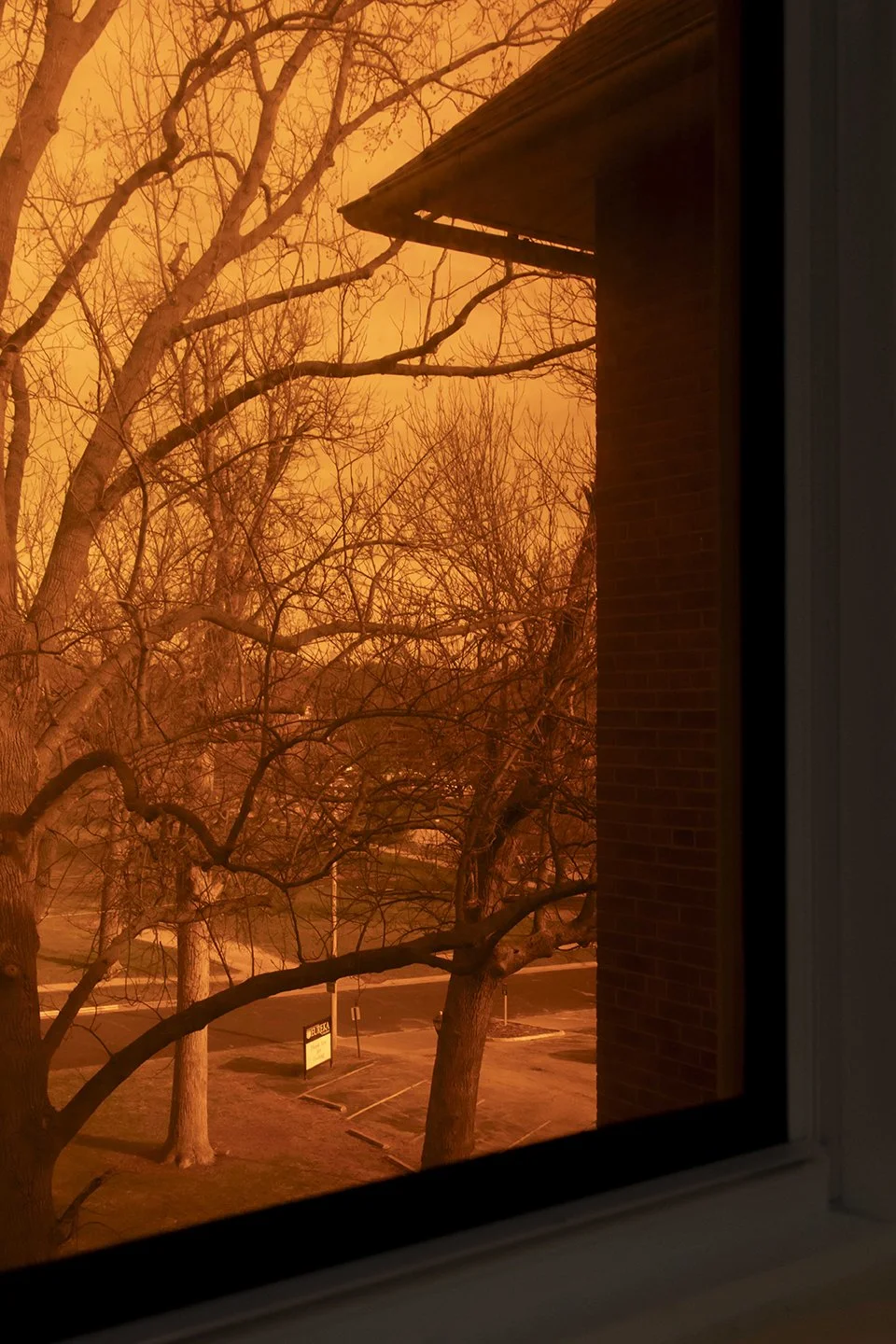
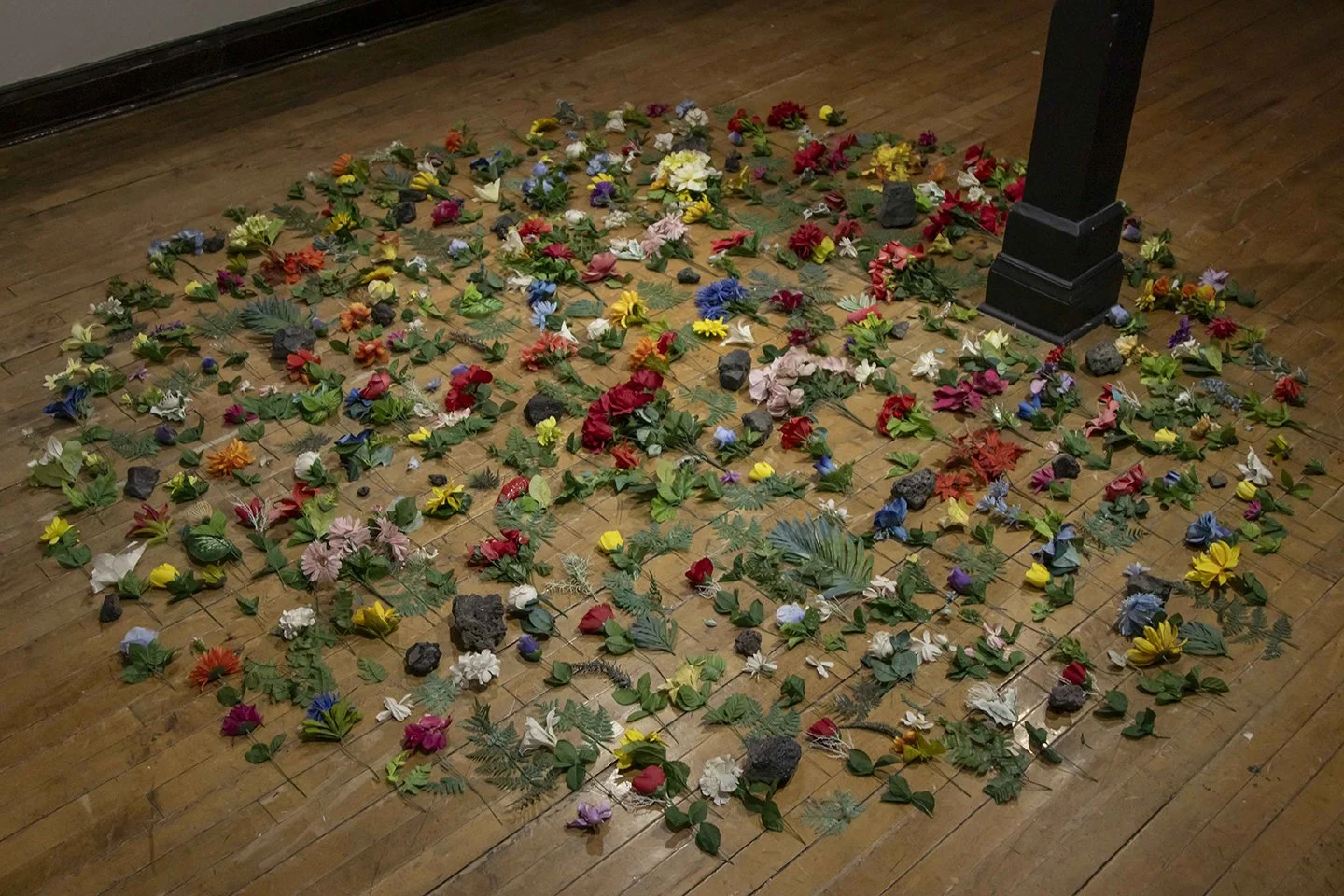
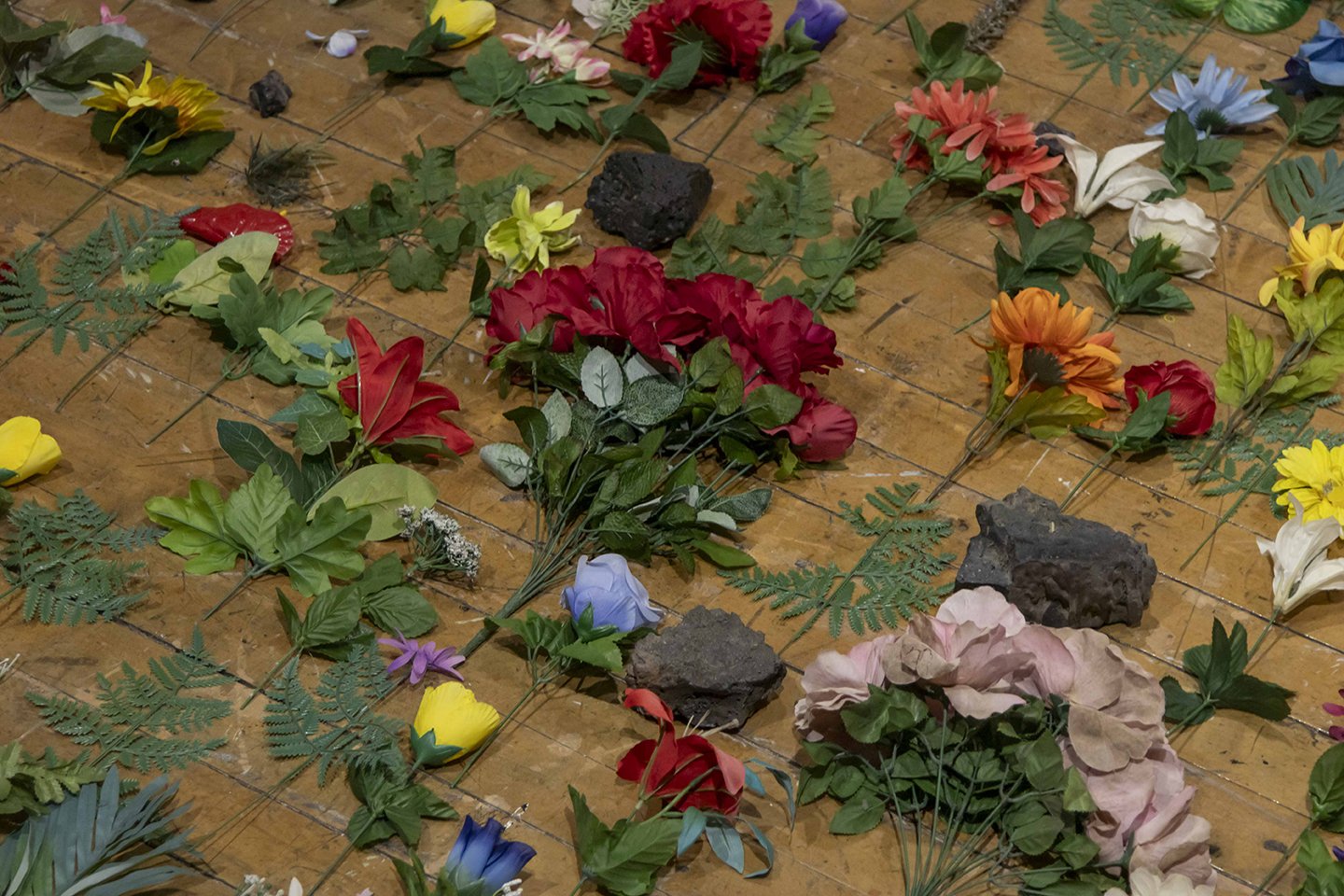
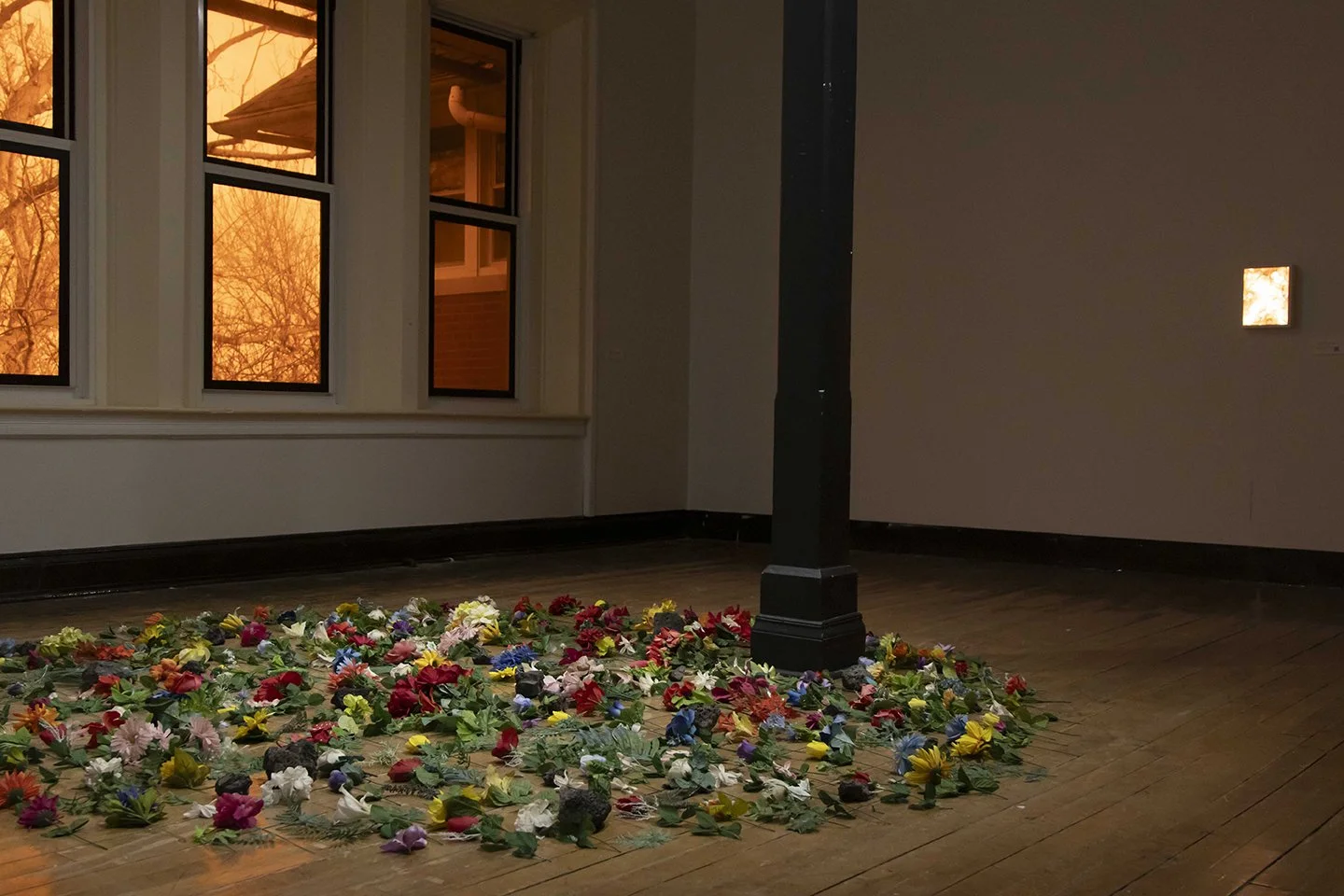
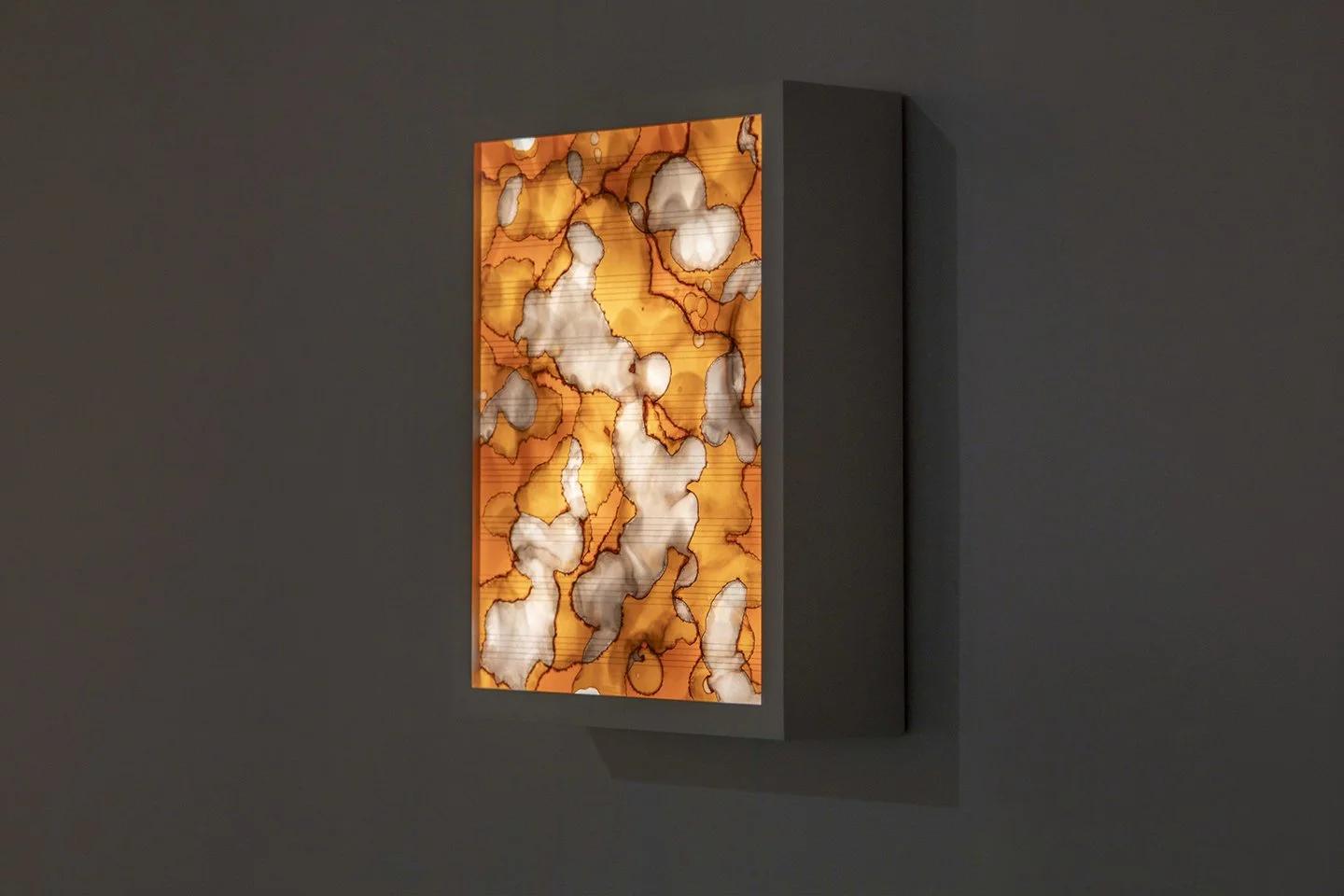
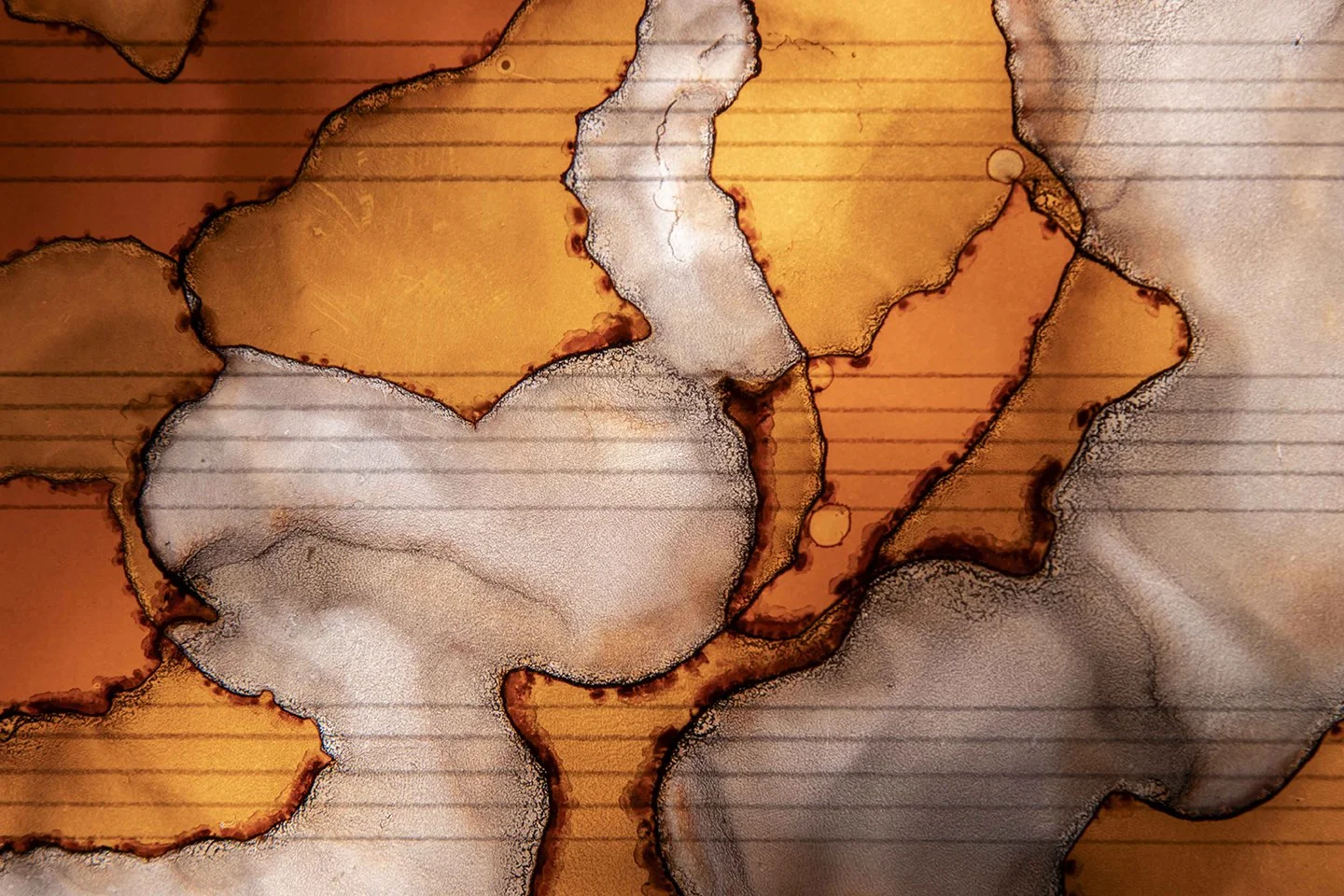
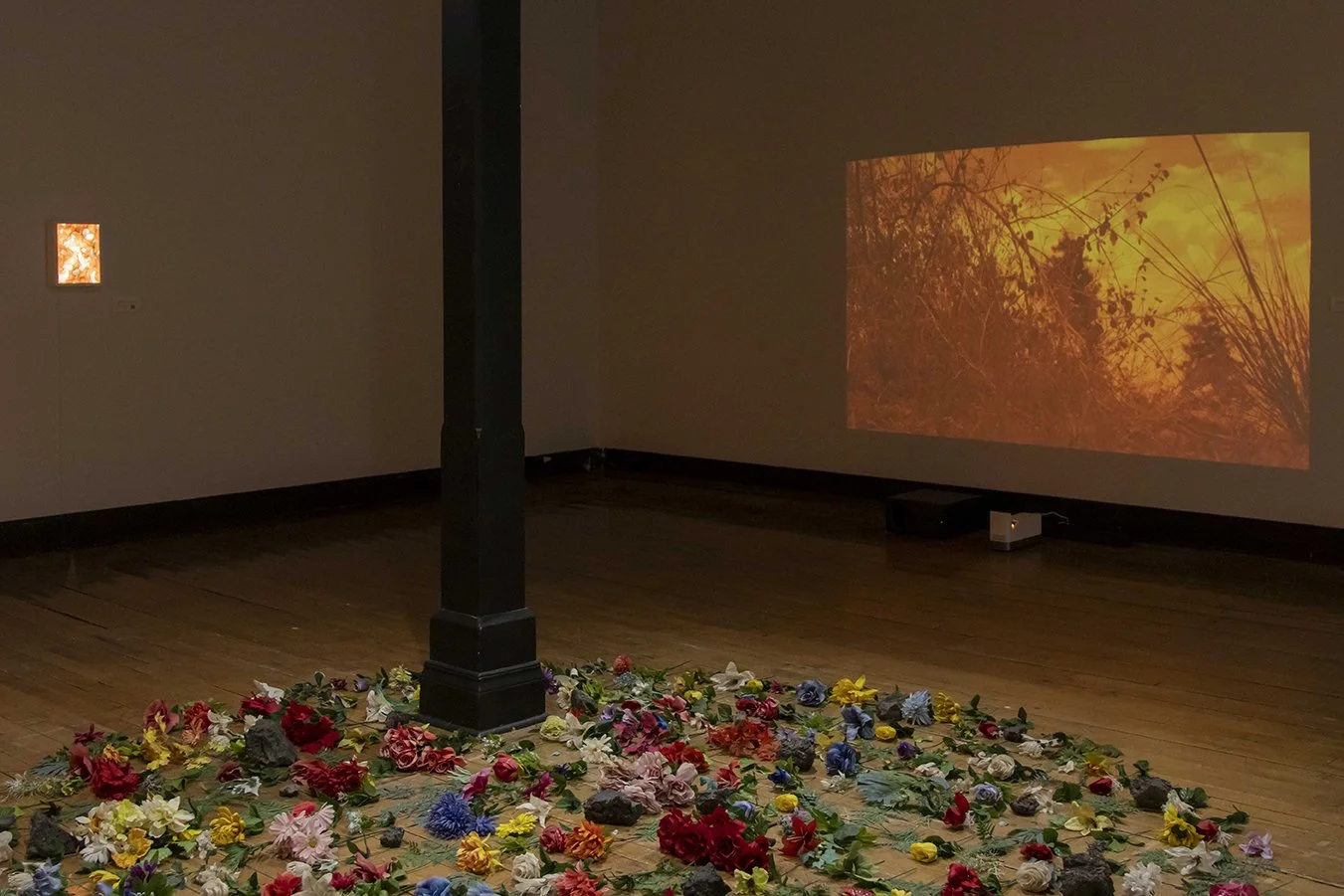
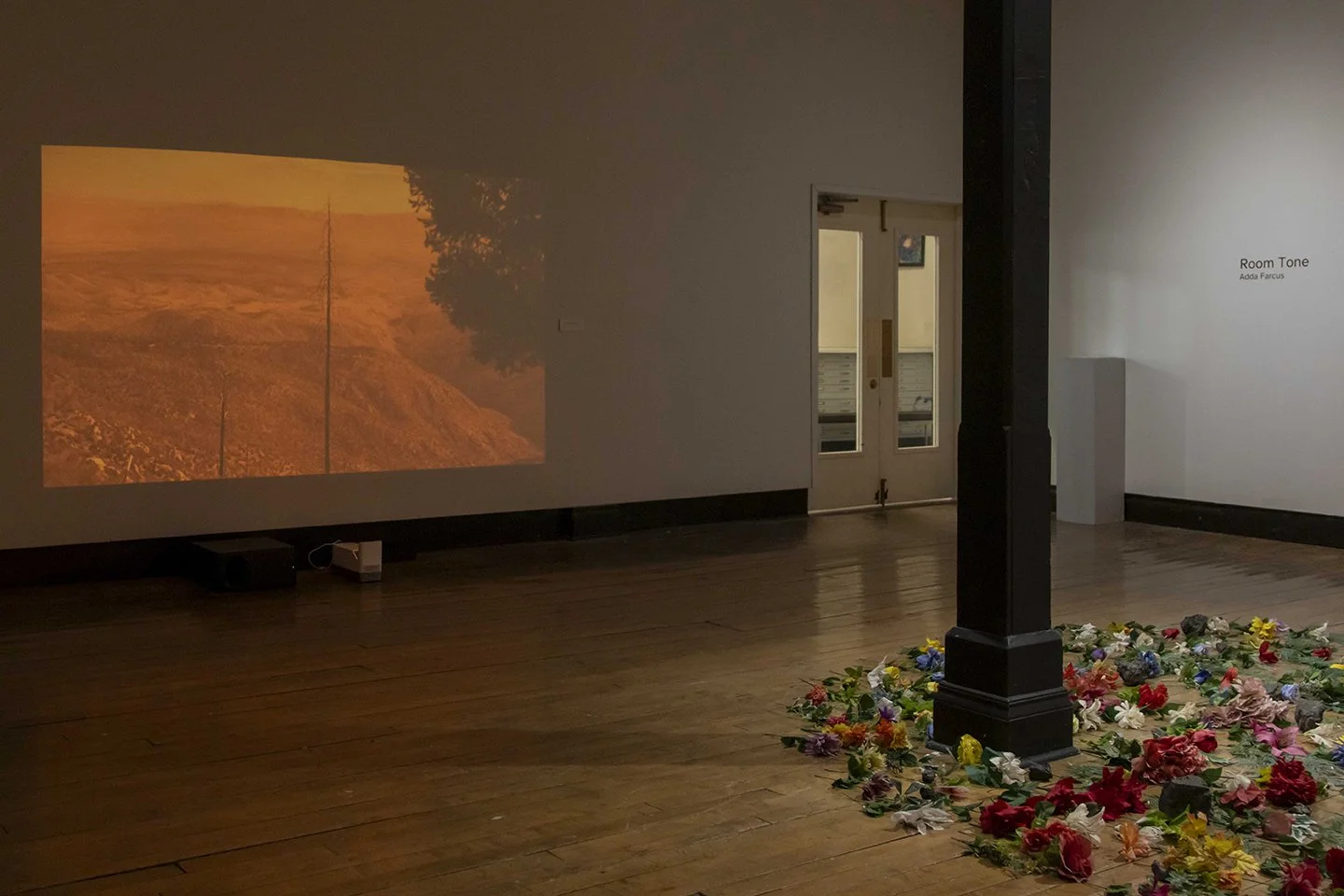
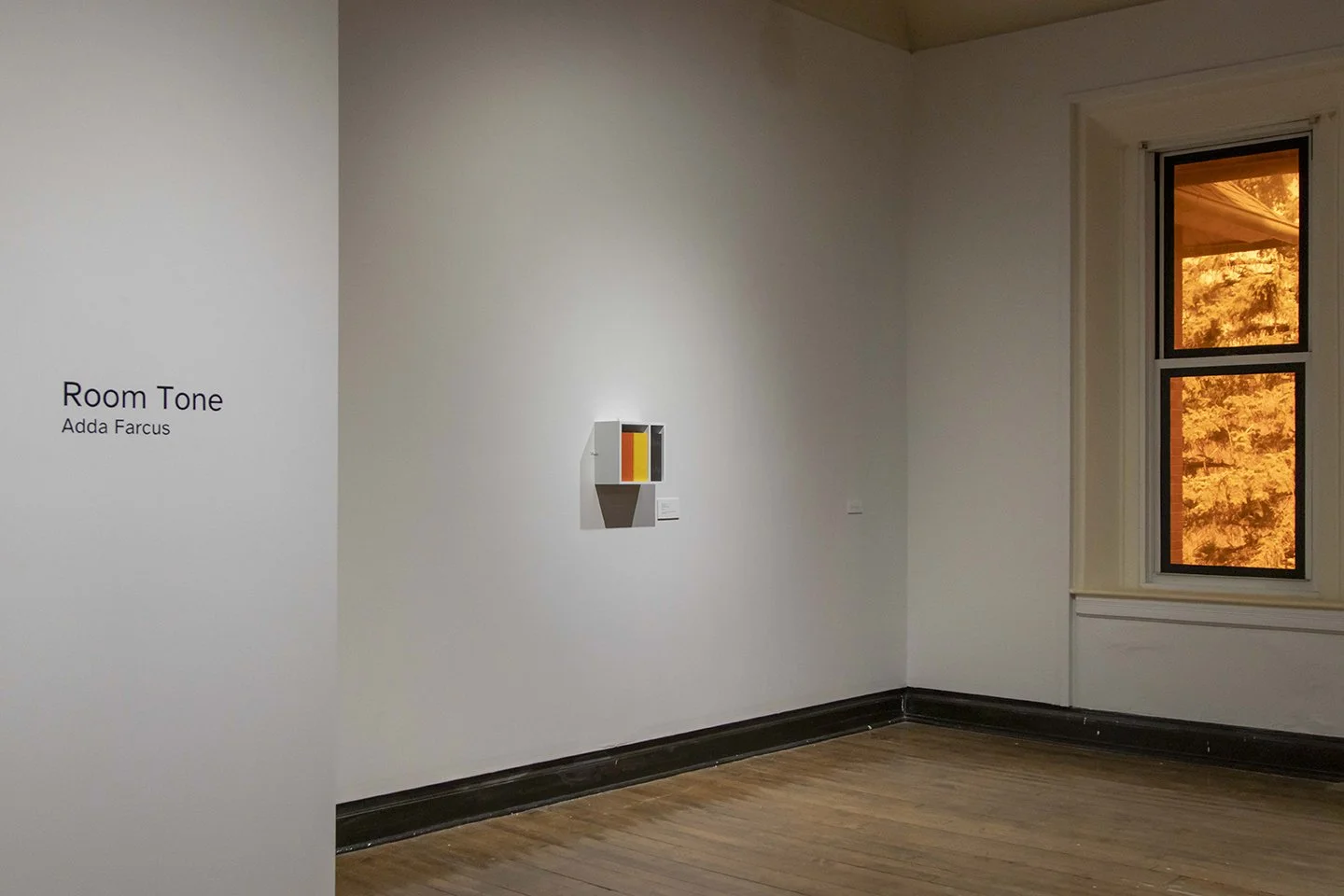
Room Tone is a stage and environment of sound and color which explores mortality and climate change.
In TV and cinema, “room tone” is the ambient background sound of the location being recorded. Room tone is also called presence, and each space possesses a unique presence. Sound and color (light) are wavelengths and can be used to inflect presence and emotional resonance on a space. This also means that both sound and color have frequencies. Similar to the octave between two musical notes, the spectrum of visible light includes just under one octave. And “noise” in a visual environment occurs when color and light create a veil that interferes with perception.
For the works in this exhibition, Farcus’ research and production was driven by partnerships and interviews with people in death- and grief-related professions regarding their thoughts and feelings about climate change. The installation of Room Tone, and the works presented within, use color tone and sound tone as filters to create perceptions, presences, and frequencies akin to how the deathworkers defined their experiences of climate change effects and the climate-related emotions they cause. The works give form to the complicated intersections of climate change and psychoterratic emotional states such as eco-grief and climate-driven anxiety.
Albrecht, G. A. (2019). Earth emotions: New Words for a New World. Cornell University Press.
Birren, F. Light, Color & Environment. (1988). Schiffer Publishing.
Spectrum Piano. (n.d.). Harvard Natural Sciences Lecture Demonstrations. https://sciencedemonstrations.fas.harvard.edu/presentations/spectrum-piano
Spivack, M., & Tamer, J. (1984). Light and color: A Designer’s Guide. American Institute of Architects Press.